Thursday, July 11, 2013

Beauty and youth - the pursuit of perfection.

It is said that beauty is worshiped, as if this were a novelty of the present day. But it is not. The history of humankind shows that beauty is present throughout all times and cultures. And art is a reflection of this need to capture it. Among hundreds of examples, see the Venus de Milo, from Century II BC the famous Greek statue which is in the Louvre, or David, of 1504 – one of the statues of Michelangelo. Both are representations of the ideal of beauty.
Early on, stories like Snow White or Cinderella populate a child's imagination, revealing the desire for beauty and the envy that it raises.
Youth is not a trace of modern days either. There is a classical myth, of Greco-Roman origin, which talks about the fountain of youth being a river originating on Mount Olympus (the home of the gods), passing through the earth and which made immortal those who drank from its waters. And there are several other legends about the pursuit of youth, this search that plagues us all in time. The myth of the vampire is merely an expression of desire for eternal youth.
But in these stories or legends, beauty and youth demanded a price almost always too high to be paid the loss of the soul, isolation, unhappiness. As if humanity were being warned about the limits of their desires.
Beauty and youth are not, therefore, characteristics of today's world. They are part of the essence of humanity ever since the beginning of desire, vanity, fear of aging, envy, finally, since man is man.
What happens now is that the mechanisms to pursue beauty and youth were morally and scientifically overcome. There are no stories that threaten to destroy anyone who wants to be beautiful, nor are there limits to the pursuit of youth. What we want is to maintain a youthful and beautiful appearance at any price. And all this was exacerbated to such an extent that there are no limits.
Consumer society has created standards and legitimized the desire for beauty and youth, and science helped humankind achieve those standardsso often misrepresented and wrong. This combination of youth and beauty feeds an industry that moves billions and it has made us each and every one of us hostage to it. Nobody knows how to stop this mad quest for perfection, but society is this way because we contributed for it to be so, by accepting the standards imposed by the aesthetic industry, by pursuing the perfect beauty and by struggling to erase the traces of age.
Does anyone really believe any of those products that claim to rejuvenate the body in four weeks? Does anyone really believe those before and after pictures of miraculous lotions? And what about the excessive surgeries that transform women into deformed beings, with a still and expressionless face, and a huge mouth? Is that beauty?
We submit to the tyranny of the endless search for perfect bodies and unchanged faces, sculpted by the scalpel. And sometimes, being young is not enough: we see fifteen year old girls placing silicone implants and doing liposuction... It is the height of desperation in the pursuit of perfection!
The body has become the center of the universe, around which revolves the whole process of socialization. And people have never been so unhappy, so empty and lonely. Fears, dissatisfactions and depressions multiply. Nobody is beautiful enough – not even the most beautiful. Living off beauty or for beauty does not increase self-confidence or happiness, on the contrary, in most cases, it increases insecurity and unhappiness, because the standards are always too high, unreachable: Brad Pitt's eyes, Georges Clooney’s smile, Johnny Depp’s style, Angelina Jolie's mouth, Charlize Theron’s beauty, Halle Berry's skin...
We all pay the price for this rampant demand for beauty and the ephemeral: we refuse to admit our age, but youth will phase out, and that's inevitable. It is a natural process of maturation of the body; it is the road of no return towards old age (word that arouses true horror in some people!). The truth is that, today, this insane quest for lost youth made ​​the wisdom and serenity of age no longer valued. No matter what we look like, age is inexorable and time does not stop.
The real problem is not with the marks of the passage of time on the body or on the face. The problem is inside: in the head and in the soul. Those who fight against time and against nature are doomed to unhappiness. It's like trying to hold the wind in your hands: in the end, they always end up empty.
We must accept the body before we accept age. Accepting imperfections and making strengths out of them: Beyoncé’s body became her greatest triumph; Lilly Collins turned her bushy eyebrows into her face’s main feature, Barbara Streisand’s nose made ​​her into a beauty icon... Feeling good with the body is the first step toward the harmony and it depends solely on each and every one of us. Sensuous women are women who accept what nature gave them and do not waste time trying to change it.
And then we have to accept our age whatever it is in order to be happy. There’s no use stretching our skin and looking startled all day long, putting on Botox and turning into a motionless statue, moving the fat from the thighs (or somewhere else) to the mouth, adding liters of silicone here and there, and still be unhappy... Age does not change: it is what it is!

And what about the mirror? Well, the mirror has to be an ally and not an enemy. It only returns our image: it is a reflection of what we are. Mirrors like happy people. And happiness is really simple: it is linked to acceptance and well-being. Age brings us wisdom and grace to know how to age gracefully and to accept it. And those who deny this will inevitably fall into the traps of the ridicule.

Tuesday, May 14, 2013

Chic is to treat others well.


Brand names translate into status, and there are essential icons that reveal who people are, even if we have never spoken to them: the glasses, the clothes, the shoes, the handbag, the watch, the cell phone... It is a series of objects that function as a presentation and allow you to position that person on the social ladder. It is a clear definition of “who has what” because that revealswho has how much”!
It's hard to escape this pattern of behavior however much you want or try and in some social circles, it is almost impossible. It has become a paradigm that allows you to recognize others by their purchasing power, by their social status, quite typical of our materialistic modern world.
But actually, this is a false question, because money, brand names, clothing and objects, are insufficient to reveal who people are. What separates them really – is discretion, education, generosity and distinction. And these traits divide people into two groups, roughly: the elegant who strive for discretion, and the inelegant who strive to be seen at any price.
The second ones the inelegant expose their privacy, invade the public sphere with their exaggerated emotions and feel the need to show the labels of their clothes. They like to tell you what they have and talk about what they have bought or are planning to buy. They cite many brand names and frequently mispronounce them. Givenchy is difficult for them, so is Moschino. And they do not even know what Fendi is... But they assert themselves through brand names.
Their behavior is dictated by exaggerations: they talk too much and too loudly, gesturing too much, showing too much, embracing others too much, wearing clothes too tight or too short and necklines too revealing. Everything about them is excessive. But these are only the visible traces. Worst of all is the habit of mistreating others the doorman, the manicure, the driver, the shop assistant, the waiter... They are rude, coarse: they do not say thank you, please, good morning or excuse me.
Miguel-Angel García Martí said: “The way you talk says more about you than the clothes you wear.”
On the other hand, the elegant ones are made from another fiber: they do not expose brand names, they do not speak of their goods or jewelry, and they always think less is more. Discretion is their keyword, and everything in them is restrained, serene, without exaggeration.
Being elegant is something that has to do with an attitude, it is far beyond having money, and it is fundamentally to be educated. And best trait of the elegant is the respect for others: they are generous, smiling, soft, and do not insult or abuse anyone.
Someone truly elegant cannot be imitated because it’s not enough to have, you have to be! You have to be polite, reserved, generous, simple, and distinct. And being is hard to achieve: it is part of a refinement acquired over the years, and it penetrates the skin, making it as natural as breathing.
Currently people define themselves increasingly more by the money they own: there are the haves and the have-nots. It's a simplistic way of classifying the world by the patterns of consumption and wealth: it’s simplistic and paradoxically poor.
What defines us is how we treat others, because it tells all about us. It is what comes out of us that reveals who we are.

Wednesday, March 27, 2013

Small achievements, big victories.


The little things in life are a must. They are the ones that lead us to maturation, that shape our personality traits and, ultimately, dictate us where we go. They are like a ladder that we must use daily – sometimes going up, and sometimes going down.
Nobody is ready to embrace their fate or become an adult without going through the rite of constant small achievements. Destiny is fulfilled only after learning.
The first step is, symbolically, the beginning of the conquest of space. It's the beginning of the walk that will later take us to expand geographies. First the world is just a square around the table which we use to prop our delicate legs, then the course slowly widens, at the hands of parents who lead us through the streets. And finally, that first step, culminates in the passing of life, made of tiny choices constantly woven we go through here and not there, we go further, we stop, we cross this or that place...
The memories accumulate, and as we reach maturity we understand, finally, that to achieve small things it took great efforts, and great battles were fought.
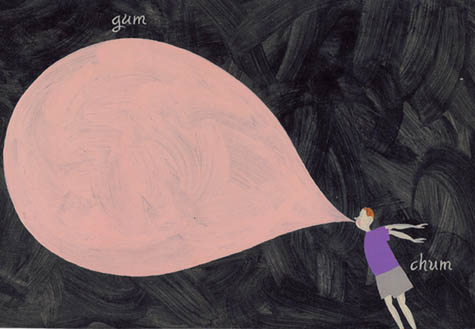
Like the first time you popped a bubble gum, after many failed attempts and many days fighting hard to make something so useless, but that seemed so fascinating as we were not able to do it. And, unexpectedly, the bubble ball came round as the mouth, growing with the breath until it reached its maximum transparency and it popped, giving us a small achievement.
Or when you learnt to whistle. You realize that there is a technique: the whistle fits the lips, and it is the whistle that chooses us. Try it again and again until the day it comes out whole, ready, as if it had always lived within us. And the sound propagates itself, it takes us with it, and this is another small achievement.
That is life: the set of all the small achievements. They are the ones that make the difference, that dictate the course, that wake up rationality, that lead to maturity, that break boundaries and lead to overcoming. It's the first smile, the first word, the first step that make the transition from crib to a stuttering childhood and that lead us into the future.
Sometimes a small gesture transforms itself into an event of even larger proportions so that all future reveals itself in a kind of epiphany – it may be that moment when your eye meets another and you know simply, you simply know, that the future is all there.
The future is the place where it is believed that dreams, projects and desires inhabit. Everything that you cannot accomplish today, gets filed away in the future, gets thrown up ahead and we hope that one day the twists of life and our efforts will get us there. From the moment we understand what the future means we start to pursuit it, like cats trying to catch their own tails.
But the future is made of today's decisions, today’s moments and small achievements. The future is like us: it isn’t born ready; it doesn’t come out with a bang, suddenly, like the cry of a newborn. It is slow, it grows quietly, and it feeds on the successes and mistakes. You have to sweat and cry, laugh and fool around, skin your knees in childhood, make soap bubbles, have a first love, and make sand castles before you build a real house.
The future emerges of small achievements, and reveals itself in big victories.

Monday, March 18, 2013

The excesses and the superheroes


Excess is what remains, what is surplus, lawlessness, lack of moderation. Excess is what is detrimental, instead of being useful or beneficial.
Excess hurts, and it causes pain. It's an addiction, a compulsion, a disease. It is the result of some chemical and emotional disarray that shakes people inside and overflows into the body, as a glass full of water.
Excess is always an excess: food, alcohol, cigarettes, and drugs! These are problems with different profiles and consequences, but they are, above all, an excess: something that breaks the boundary of the skin and spills onto the body. It is when it reaches the body that the excess is no longer a secret and becomes visible and objectionable, especially for those who have never confronted their inner boundaries or their lack.    
There are those who counsel moderation even with an inappropriate lightness – to those who suffer from some kind of excess. But dealing with the excess is a difficult and painful process. If it were easy there would be no excesses, but only a perfect world of balance!
Mark Twain said, “we do not rid ourselves of a habit by throwing it out the window: it is necessary to make it go down the ladder step by step.” This is how we free ourselves of what we do not want, what makes us sick, what hurts us: slowly, very slowly.
Everybody is well aware of the harmful effects of their compulsion, and often wakes up thinking that he has to stop or overcome the problem. And as soon as that first morning thought strikes, he throws himself immediately at the compulsion that he is trying to get rid of. It's as if the thought itself is enough for the whole body and energy to throw themselves at the satisfaction of that addiction. It becomes greater than everything. It is the center of everything and it is around it that the whole day is organized.
It is not the advice or the knowledge of the consequences of a compulsion that makes someone stop. Not even the most modern medicines are effective against an addition if there isn’t an inner decision. There is obviously a question of chemistry - it is a disorder, but if there is no will there is no way to overcome it!
Mastering a compulsion, an addiction, requires three basic things: humility to recognize the problem, willingness to quit it and the right time. There’s no point rushing to the hospital, to the sophisticated medications or to have a battalion of friends and professionals full of good intentions.
A compulsion is kept at bay from the inside out starting from the inside, like any major decision in life. It needs time the right time to mature, until the will becomes dense and passes from the gaseous state that is the thought, to the solid state that is the action! And that’s the only way it’ll work. As long as there is no consciousness, no will, and no time there is no way to quit a compulsion – food, cigarettes, alcohol, drugs or any other.
Quitting an addiction is a slow process that measures how tough you are, because people may quit an addiction, but the addiction never quits them. It is a shadow that lives forever in their head and it comes back at a slight gesture of distraction, at the slightest oversight. An addiction is like an unruly child; it is bold, rebellious and boundless: it needs constant monitoring and care. You do not quit an addiction with anger, rage, hating it and denying it. You quit an addiction the same way you quit a longtime lover, when there’s still love, but the desire is gone: slowly and tenderly, respecting the past, but creating a new future.
Those who can quit a compulsion discover an unexpected strength that is capable of changing their fate. After the suffering caused by the abstinence and the reeducation of habits, they are reborn and feel a bit like the superheroes in cartoons: owners of a superpower that makes them masters of life, and truly free. They exceeded their limits because they have controlled what is most difficult to master: the demons that dwell in the soul, the ghosts that haunt the mind.

Wednesday, January 30, 2013

When life takes a turn for the worse.


Sometimes life takes a turn for the worse and it may be the reflection of what happens around us, the result of extraordinary events that have alienated us from the direction we had planned and future we had dreamt. They are natural disasters, wars, global crises, accidents or some uncontrollable event that befalls us.
But life can also go wrong when we realize that we have made a series of bad choices: when we’ve left a safe job before we got another one, when we’ve signed a loan we can’t possibly pay back, when we’ve plunged into some crazy addiction, when we’ve spent more than we could afford...
And then one day, suddenly, that which we thought was safe, has changed, it has transformed. And we have to start over: change the car, move house, change jobs, move to another country, or move to another continent. Change has become essential because life took a turn for the worse and we have to reinvent the future. We have to start from scratch without anything, in debt, tired, exhausted.
But we must move on and in order to change there are three basic attitudes we must adopt: accountability, adaptability and proactivity. This is the tripod of beginnings and successes.
Accountability is the acknowledgment that we are masters of our lives and we share in what is happening. Except for some kind of catastrophe that we could not avoid, we are always responsible for the decisions that led us to the situation we are in. It was not the others, it was us who made the choices, who decided, accepted, agreed, and who were silent. It is easier to believe that it’s the others’ fault - the neighbor’s, the boss’, the friend’s, the family’s, the companion’s - but it’s not true: the blame for the situation we are in is ours. And it all happened along our path, in an accumulation of small choices, small decisions that seemed not to matter, but when they were combined, acquired a brutal force that devastated our lives.
Adaptation is the second attitude: being able to live in the present, overcoming the difficulties - one day at a time. Living with what we have, as we can, but looking to the future instead of lamenting the lost life and stay stuck in the past. Adaptation was what ensured the evolution of species and is a stepping stone to success. Adaptation is making the best of situations.
Proactivity, the third approach is the ability to "chase": to get on your feet, wipe the tears, stop whining and get out there. It is investing in the work, overcoming difficulties, being dynamic, making things happen and pursuing change. It is the opposite of accommodating. It's always to be one step ahead, anticipating problems.
Sometimes people wonder about the lives of others, thinking that success was a matter of luck; it was something that happened in one day. This is not true: successful people do not have luck; they have the foresight to recognize opportunities and invest their energies at work to transform the opportunities into successes, and achieve their goals - whatever they may be (because success is relative and depends on the eye of the beholder).
Successful people do not stay on the couch waiting for the depression to be over, they are "go-getters" - they fight and they sweat. Successful people do not blame others for their problems, mistakes and failures; they take responsibility and learn from them. Successful people do not criticize others or speak badly of other people's lives; they speak of ideas and they plan tomorrow. Successful people do not whine nor keep resentments, they give thanks for what they have and they forgive others. Successful people do not leer at other people’s possessions nor do they envy what others have - they do not have time for that because they are too busy building their future. Successful people do not want others to be unhappy or unsuccessful, they are generous and want everyone to be happy and have success in their lives. Successful people know that the universe is a mirror: it gives your essence back to you.
Yes, when life takes a turn for the worse we need to change. But first we need to change inside.