Wednesday, March 27, 2013

Small achievements, big victories.


The little things in life are a must. They are the ones that lead us to maturation, that shape our personality traits and, ultimately, dictate us where we go. They are like a ladder that we must use daily – sometimes going up, and sometimes going down.
Nobody is ready to embrace their fate or become an adult without going through the rite of constant small achievements. Destiny is fulfilled only after learning.
The first step is, symbolically, the beginning of the conquest of space. It's the beginning of the walk that will later take us to expand geographies. First the world is just a square around the table which we use to prop our delicate legs, then the course slowly widens, at the hands of parents who lead us through the streets. And finally, that first step, culminates in the passing of life, made of tiny choices constantly woven we go through here and not there, we go further, we stop, we cross this or that place...
The memories accumulate, and as we reach maturity we understand, finally, that to achieve small things it took great efforts, and great battles were fought.
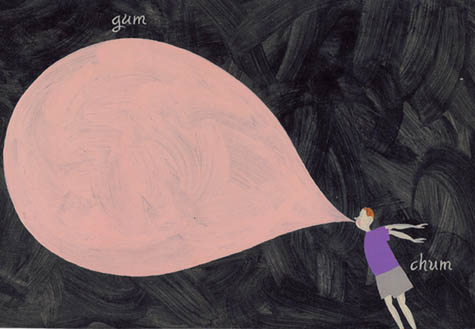
Like the first time you popped a bubble gum, after many failed attempts and many days fighting hard to make something so useless, but that seemed so fascinating as we were not able to do it. And, unexpectedly, the bubble ball came round as the mouth, growing with the breath until it reached its maximum transparency and it popped, giving us a small achievement.
Or when you learnt to whistle. You realize that there is a technique: the whistle fits the lips, and it is the whistle that chooses us. Try it again and again until the day it comes out whole, ready, as if it had always lived within us. And the sound propagates itself, it takes us with it, and this is another small achievement.
That is life: the set of all the small achievements. They are the ones that make the difference, that dictate the course, that wake up rationality, that lead to maturity, that break boundaries and lead to overcoming. It's the first smile, the first word, the first step that make the transition from crib to a stuttering childhood and that lead us into the future.
Sometimes a small gesture transforms itself into an event of even larger proportions so that all future reveals itself in a kind of epiphany – it may be that moment when your eye meets another and you know simply, you simply know, that the future is all there.
The future is the place where it is believed that dreams, projects and desires inhabit. Everything that you cannot accomplish today, gets filed away in the future, gets thrown up ahead and we hope that one day the twists of life and our efforts will get us there. From the moment we understand what the future means we start to pursuit it, like cats trying to catch their own tails.
But the future is made of today's decisions, today’s moments and small achievements. The future is like us: it isn’t born ready; it doesn’t come out with a bang, suddenly, like the cry of a newborn. It is slow, it grows quietly, and it feeds on the successes and mistakes. You have to sweat and cry, laugh and fool around, skin your knees in childhood, make soap bubbles, have a first love, and make sand castles before you build a real house.
The future emerges of small achievements, and reveals itself in big victories.

Monday, March 18, 2013

The excesses and the superheroes


Excess is what remains, what is surplus, lawlessness, lack of moderation. Excess is what is detrimental, instead of being useful or beneficial.
Excess hurts, and it causes pain. It's an addiction, a compulsion, a disease. It is the result of some chemical and emotional disarray that shakes people inside and overflows into the body, as a glass full of water.
Excess is always an excess: food, alcohol, cigarettes, and drugs! These are problems with different profiles and consequences, but they are, above all, an excess: something that breaks the boundary of the skin and spills onto the body. It is when it reaches the body that the excess is no longer a secret and becomes visible and objectionable, especially for those who have never confronted their inner boundaries or their lack.    
There are those who counsel moderation even with an inappropriate lightness – to those who suffer from some kind of excess. But dealing with the excess is a difficult and painful process. If it were easy there would be no excesses, but only a perfect world of balance!
Mark Twain said, “we do not rid ourselves of a habit by throwing it out the window: it is necessary to make it go down the ladder step by step.” This is how we free ourselves of what we do not want, what makes us sick, what hurts us: slowly, very slowly.
Everybody is well aware of the harmful effects of their compulsion, and often wakes up thinking that he has to stop or overcome the problem. And as soon as that first morning thought strikes, he throws himself immediately at the compulsion that he is trying to get rid of. It's as if the thought itself is enough for the whole body and energy to throw themselves at the satisfaction of that addiction. It becomes greater than everything. It is the center of everything and it is around it that the whole day is organized.
It is not the advice or the knowledge of the consequences of a compulsion that makes someone stop. Not even the most modern medicines are effective against an addition if there isn’t an inner decision. There is obviously a question of chemistry - it is a disorder, but if there is no will there is no way to overcome it!
Mastering a compulsion, an addiction, requires three basic things: humility to recognize the problem, willingness to quit it and the right time. There’s no point rushing to the hospital, to the sophisticated medications or to have a battalion of friends and professionals full of good intentions.
A compulsion is kept at bay from the inside out starting from the inside, like any major decision in life. It needs time the right time to mature, until the will becomes dense and passes from the gaseous state that is the thought, to the solid state that is the action! And that’s the only way it’ll work. As long as there is no consciousness, no will, and no time there is no way to quit a compulsion – food, cigarettes, alcohol, drugs or any other.
Quitting an addiction is a slow process that measures how tough you are, because people may quit an addiction, but the addiction never quits them. It is a shadow that lives forever in their head and it comes back at a slight gesture of distraction, at the slightest oversight. An addiction is like an unruly child; it is bold, rebellious and boundless: it needs constant monitoring and care. You do not quit an addiction with anger, rage, hating it and denying it. You quit an addiction the same way you quit a longtime lover, when there’s still love, but the desire is gone: slowly and tenderly, respecting the past, but creating a new future.
Those who can quit a compulsion discover an unexpected strength that is capable of changing their fate. After the suffering caused by the abstinence and the reeducation of habits, they are reborn and feel a bit like the superheroes in cartoons: owners of a superpower that makes them masters of life, and truly free. They exceeded their limits because they have controlled what is most difficult to master: the demons that dwell in the soul, the ghosts that haunt the mind.

Wednesday, January 30, 2013

When life takes a turn for the worse.


Sometimes life takes a turn for the worse and it may be the reflection of what happens around us, the result of extraordinary events that have alienated us from the direction we had planned and future we had dreamt. They are natural disasters, wars, global crises, accidents or some uncontrollable event that befalls us.
But life can also go wrong when we realize that we have made a series of bad choices: when we’ve left a safe job before we got another one, when we’ve signed a loan we can’t possibly pay back, when we’ve plunged into some crazy addiction, when we’ve spent more than we could afford...
And then one day, suddenly, that which we thought was safe, has changed, it has transformed. And we have to start over: change the car, move house, change jobs, move to another country, or move to another continent. Change has become essential because life took a turn for the worse and we have to reinvent the future. We have to start from scratch without anything, in debt, tired, exhausted.
But we must move on and in order to change there are three basic attitudes we must adopt: accountability, adaptability and proactivity. This is the tripod of beginnings and successes.
Accountability is the acknowledgment that we are masters of our lives and we share in what is happening. Except for some kind of catastrophe that we could not avoid, we are always responsible for the decisions that led us to the situation we are in. It was not the others, it was us who made the choices, who decided, accepted, agreed, and who were silent. It is easier to believe that it’s the others’ fault - the neighbor’s, the boss’, the friend’s, the family’s, the companion’s - but it’s not true: the blame for the situation we are in is ours. And it all happened along our path, in an accumulation of small choices, small decisions that seemed not to matter, but when they were combined, acquired a brutal force that devastated our lives.
Adaptation is the second attitude: being able to live in the present, overcoming the difficulties - one day at a time. Living with what we have, as we can, but looking to the future instead of lamenting the lost life and stay stuck in the past. Adaptation was what ensured the evolution of species and is a stepping stone to success. Adaptation is making the best of situations.
Proactivity, the third approach is the ability to "chase": to get on your feet, wipe the tears, stop whining and get out there. It is investing in the work, overcoming difficulties, being dynamic, making things happen and pursuing change. It is the opposite of accommodating. It's always to be one step ahead, anticipating problems.
Sometimes people wonder about the lives of others, thinking that success was a matter of luck; it was something that happened in one day. This is not true: successful people do not have luck; they have the foresight to recognize opportunities and invest their energies at work to transform the opportunities into successes, and achieve their goals - whatever they may be (because success is relative and depends on the eye of the beholder).
Successful people do not stay on the couch waiting for the depression to be over, they are "go-getters" - they fight and they sweat. Successful people do not blame others for their problems, mistakes and failures; they take responsibility and learn from them. Successful people do not criticize others or speak badly of other people's lives; they speak of ideas and they plan tomorrow. Successful people do not whine nor keep resentments, they give thanks for what they have and they forgive others. Successful people do not leer at other people’s possessions nor do they envy what others have - they do not have time for that because they are too busy building their future. Successful people do not want others to be unhappy or unsuccessful, they are generous and want everyone to be happy and have success in their lives. Successful people know that the universe is a mirror: it gives your essence back to you.
Yes, when life takes a turn for the worse we need to change. But first we need to change inside.

Monday, December 17, 2012

The true Christmas spirit.


Every year in December, the world is assailed by the "Christmas spirit": Christmas trees full of lights rise up everywhere; the shops are decorated with vibrant colors; Santa and his reindeer are on standby, with their large packages, on the eaves of houses and buildings; people enter the hustle and bustle, trying to buy the right gifts for family and friends, in a rampant consumerism. There is a kind of frenzy in the city, as if a fever spread to everyone. And as Christmas Day approaches, the frenzy increases and fuels a growing nervousness - people get angrier, less tolerant, traffic becomes a chaos and the insults multiply. In the end, everyone ends up losing patience with Christmas, at some point.
But is this the "Christmas spirit"? What happened to the "Christmas spirit"?
In the calendar of all religions there is a time of the year when humankind turns to itself to ponder its mistakes and successes, to celebrate life, to cultivate generosity and compassion, and to try to become spiritually elevated. It is as if each year corresponds to one more step to rise, to come closer into the light.
Christmas represents the birth date of Christ, and it is therefore the celebration of a birthday. Symbolically, birthdays are moments to rethink the paths taken and celebrate life. Christmas should be a time of reflection for Christians: a moment of celebration of the birth of Christ, in which we are reminded of his benevolence, compassion, wisdom, forgiveness and love of our neighbors. The Christmas spirit is, at its heart, love in action: it is the practice of kindness and generosity that Christ left us as an inheritance.
And kindness and generosity have no religion. They are universal values that should be cultivated by each of us, because they contribute to making the world a better place.
But it's no use making large donations, or helping half a world, if our heart is full of resentment and anger. Small gestures are worth much more than grand gestures, when people have a pure heart, free from resentment. True generosity comes from the pure souls that have grown through forgiveness and that are untouched by hatred.
The true Christmas spirit is to clean your heart and to love your neighbor – it is to forgive those who hurt you, help those you hate, not to speak ill of others, not to envy the lives of others, heal wounds, overcome resentments, find peace and love within you.
The exchange of gifts is a way of remembering and practicing generosity, but the true Christmas spirit is not to overcome others with gifts, but to fill them with love. That's what we need to get back, and that's what we need to teach our children.
Merry Christmas!

Wednesday, December 5, 2012

Kindness, learning from age.


Age is a bit like wine: it accentuates the essences. In the same way that maturation enhances the personality of the wine, age accentuates the personality traits. The virtues and the flaws seem to increase: who is good becomes better, but who is bad, becomes worse.
The goal of years, although not always clear, is to make us better people. People capable of overcoming flaws, hurts, grudges, sorrows and mistakes. People capable of learning from the pains and losses and transforming ways, not always easy ways, into kindness.
This learning is visible in some people who are in the third or fourth age, who have reached their inner balance and show a natural propensity for serenity and well-being. People with an easy smile, who cultivate kindness and the respect for others.
They keep on using words that are becoming less used with every passing day: please, thank you, excuse me. They are the remnants of a distant education, when the starting point for any relationship - even the most superficial - was the recognition that our freedom exists only if we respect the other’s freedom. A principle that shows us how we are all interconnected by an invisible umbilical cord.
These people are from a time when we lived more slowly, and everything had a more intense flavor. From a time full of small elegant gestures: holding a door for a woman to pass; greeting our neighbors - good morning, good afternoon, how are you; to ask permission for almost everything in return for practically nothing ...

A long list of details that have been deleted - swallowed by modernity, and resist only in their memory and the behavior they repeated stubbornly to fight the invasion of vulgarity.

They remind us of civility with your smooth gestures, polished by the years. They do not fret when they walk down the street and someone – stronger passes by them unexpectedly, forcing them to leave the sidewalk, and they move away gently to preserve their fragile bodies.

They do not complain when someone – faster  enters theelevator and grossly ignores themleaving them outside, waiting for the elevator to come back down.
They do not complain when someone younger passes in front of them at the grocery store’s queue, or the bank’s or pharmacy’s (despite having priority), and leaves behind, struggling to steady their tired legs.

They do not bother when someone rude and uneducated ignites the speech, do not say “please” or “thank you”, and talk to them using a condescending arrogance, confounding the wisdom of age with disability.
They do not grumble when someone too eager (or foolish) treats them impatiently, trying to hurry them while they remain faithful to a slower time, a time that they preserve within themselves and brings them closer to the divine.
And they forgive! They forgive the incivilities and the arrogance. They forgive the unwillingness to the moodiness. They forgive the coarseness and the roughness. They forgive the lack of education and the ignorance. And above all that – they also forgive evil!
They belong to a place that is above the fierce hustle of daily life. They are beyond: at the top of their age, their wisdom, their kindness.
They know the ebb and flow of life, the ups and downs - the capricious twists of fate. They know that we will get to where they are now; it is the inevitability of the human course.
We will all be old one day, and most people will be rude and grumpy, that did not learn anything in life, and as with some wine they will become sour and unpalatable. But some will be gentle and serene, like a fine wine that has matured quietly, smoothly, revealing in its bouquet all its origin and course.
We must not forget that what we sow now how we treat others will be what we will receive in the future!

Tuesday, November 27, 2012

The house: our second skin.


There are people who live in the same house all their lives; they know by heart all the hinges, the scratched paint, and the wood weaknesses. There are others that change house regularly: living here today and there tomorrow and hardly take the time to know the house they inhabit.
There are people who love to stay in their homes, savoring every small detail, and there are others who cannot stand being at home. They wake up in the morning and their first thought is about going out, and when they come to the end of the day it is simply to sleep.
The relationship with the house reveals a great deal about our personality! It might be thought that extroverts like to live away from home, and introverts like to stay home. But it is not necessarily so: the house is a kind of cocoon, the place for personal transformation and stillness. The house is a place to rest, to replenish energies, to quiet the mind in search of balance, to find serenity, to listen to the voice that whispers new ways and warns against the dangers. The house is our second skin! That’s why it is this so difficult to live in a house: it is where we reveal ourselves without any kind of defenses. It’s where we walk barefoot, in pajamas covering our warm skin, with disheveled hair, drinking a glass a wine on a much bigger glass than your hand, curled up on the couch like a cat, with our heads tilted at an odd angle to read the legends of a Polish filmThe house is where we undress our body and soul.
It doesn’t matter whether the house is temporary or not, the important thing is to turn it into “our” place while we are there. So, in our house we should only allow people we like, people we love, people that make us feel good, people that take us plants and affection to wish us good luck, people to take us soup when we have the flu!
It doesn’t matter whether the house is large or small, whether it is sophisticated or simple. It matters that it has a certain order and the objects and clothes are tidy, because it is that order that makes the houses our own.
You don’t have to enjoy being at home, but it is fundamental to know how to stay at home. This allows us to know who we are; to take a moment to rethink ourselves, to recognize changes and desires, to expose weaknesses, to rest the body of daily battles. Any warrior knows when it's time to fight and when it’s time to be quiet, when it's time to run and when it’s time to stop running and when it is time to go to battle and when it’s time to go back home! Any warrior knows that his home is a safe place to rest and grow stronger!